
How to Embrace, learn and master the Vibrato.
My most Challenging obstacle in my Cello Journey.

Hi Everyone, Welcome back to another cello tip and advice!
Today, I'm going to share one of the most challenging techniques that I'm still currently working on in my cello journey and that my friend is no other than the "Vibrato". By far the hardest technique that I'm learning and trying to tackle and master. Not as easy as I thought it was once I got the momentum.
But I'll share with you guys my journey in learning how to play with Vibrato on my cello.
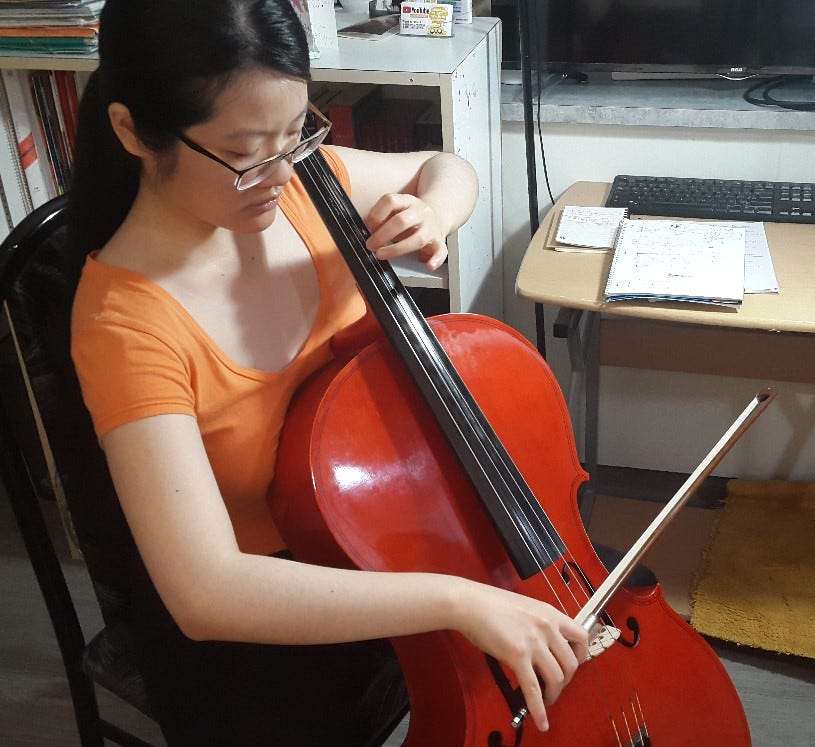
It all started in my first year of learing the cello with my cello teacher.
It was summer time and she was going away on a trip back to her home country in Poland. She was wondering what would be a good task and thing for me to practice on while she's gone for the 2 months of July and August of 2022.
Then a light bulb lit up and she said "Here, let's learn how to play the Vibrato!"
And I was like "Sure, why not, I'm up to the task!" I also asked whether if it was too early to learn it because it’s only been my first year learing the cello. But she was confident in me that I would have no problem starting to learn now.
So the last lesson we had together before she left on her vacation to Poland. I got a dabble and got a glimpse of what it's like to play the Vibrato on my cello.
We spent 30 minutes wiggling our fingers and getting the idea of what kind of movement we needed to do in order to play vibrato.
After trying her method for the first week. (Which is the rubbing method) I kind of understood the motion I had to do in order to play vibrato. The only problem was, it was inconsistent. And the control wasn't within my reach.
That's when I decided to do more research on YouTube and see/ learn “how to play vibrato” and discover many different methods and approaches there are.
The first thing I discovered was:
1. The are 2 main versions of vibrato. I would like to categorize it as the "European" method and the "American" method.
The European method suggests that we rotate our hand/finger on the belly part of our fingertip.
The American method is to slide up and down like a pumping action. Once we got that large movement of sliding up and down, then we shrink it down to the smallest movement possible and stay in one place but still have the pumping action to it.
The second was:
2. Keeping the arm and hand relaxed so that there is less tension and also you can keep up the stamina to vibrate for a very long time without feeling tired.
The third was:
3. Having a good and even amplitude to keep the vibrato even. Not suddenly going faster and slower.
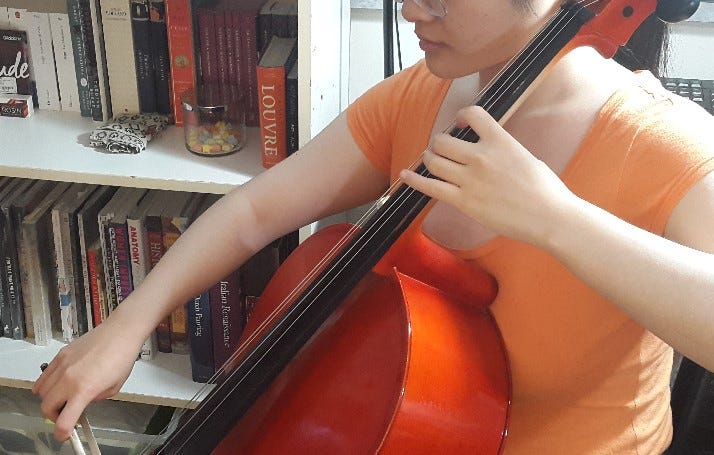
I tried out both the "American" method and the European Method.
Here are the good things and not-so-good things I've discovered.
American Vibrato
The good thing about the American method is that:
A) It helped me build a rigid arm position so that it didn't flop around so much and create too much excess movement.
B) It helped me build more calluses a lot faster on my finger so that I got used to not having too much pain at the tip of my fingers.
C) Getting an even amplitude and Vibrato.
The not-so-good things about it are:
A) The start of the motion was really good for the vibrato, but later on it got really tiring doing the pumping action constantly.
B) My arm felt very stiff and restricted from movement which made my arm tense up a lot and made it painful and tiring.
C) I can only go so fast of an Amplitude and also only for a very short period of time. So having a long continuous vibrato was really challenging.
European Vibrato
The European method, on the other hand. The good things about it are:
A) The hand is a lot more relaxed while having the rotating method of doing the vibrato.
B) The vibrato was even and I had better control over the speed of the vibrato, only at a slower pace.
C) I can do it for a long period of time without feeling very tired and exerting a lot of energy.
The not-so-good things about it are:
A) Finding the right pose for the arm and keeping it while rotating my hand was a little tricky.
B) The evenness of the vibrato started to fall apart when I went a little faster, having a mix of slow and fast amplitudes.
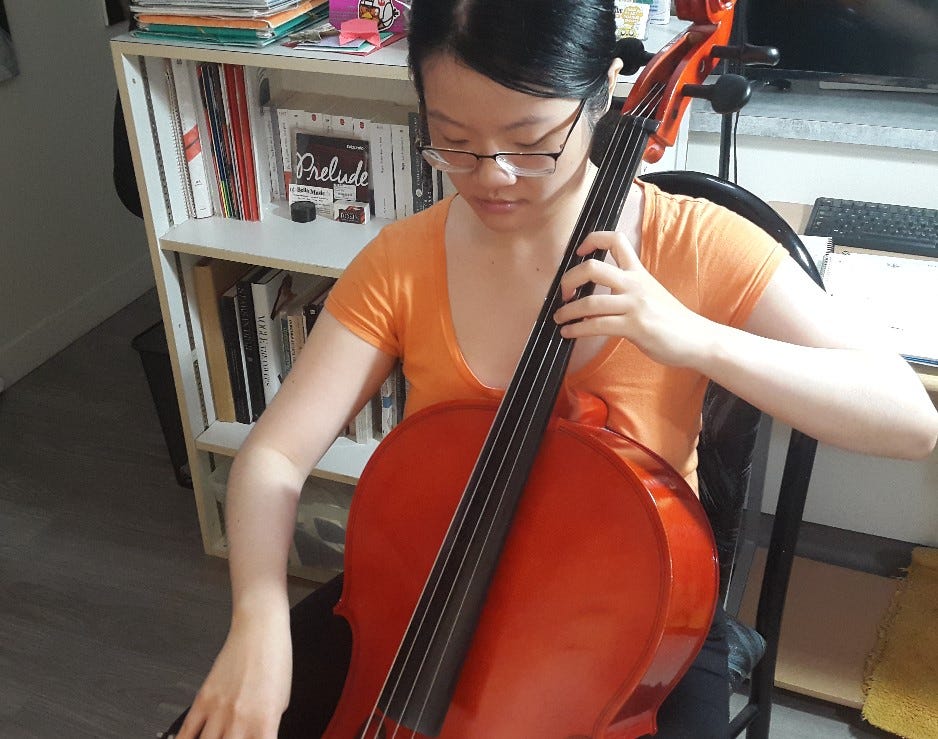
In the end, I chose the "European" Method which I preferred a lot more. Mostly because of the endurance aspect to it and also less tension.
So after I figured that out, I was still running into issues with my vibrato like:
- Even amplitude for the rotation of the finger
- having less tension in the hand and arm and staying relaxed
- Being able to vibrate for longer periods of time
- Being able to have continuous vibrato even after changing notes and strings
But as I worked my way through and discovered little methods and exercises to help me learn the secrets to solving these problems.
1. Play it slow first.
Start rotating very slowly. I recommend practicing with a metronome. Like what this cellist mentions in his video! Really helpful!
Once you are completely used to it. (This means you can vibrate for a very long time without feeling tired, and the vibration is very even and consistent. Then you can try a tiny bit of fast speed.
2. Having full control of your vibrato.
As Daniel Lelchuk mentions, It's better to have a default "slower Vibrato" than it is to have a default "fast Vibrato."
Because if you have a slow vibrato, all you have to do is to make the speed a tiny bit faster to get a nice full, and beautiful vibrato sound with an already very relaxed arm and hand. But if your default vibrato is really fast, it makes it sound like a paranoid hummingbird. Then it's a lot harder to break down the habit and slow down the hand movement of your vibrato.
3. You don't have to press so hard while playing the vibrato.
Surprisingly, You don't have to press down on the strings as hard as you thought. In fact, pressing down very hard on the strings automatically gives tension to the hand, fingers, and arm. (Which equals less freedom to vibrate and rotate your finger)
4. What part of the fingertip "belly" do you balance on?
Now this was a major discovery! The place where you rotate your finger on the string plays a big role.
As the cellist here Cellodeck mentions. She recommends rotating more on the "meaty" part of the finger and not the actual edge of the fingertip, where it's closer to where the fingernail is. The reason why that is that you have better coverage and space where your finger presses if you play with the meaty part.
5. Bent finger vs. straight finger
This one has always been a great challenge for me to choose. Because we as humans are each and individually built very differently for example: some of us may have longer fingers or shorter arms etc. Some may prefer having a straighter finger in order to keep a better balance, while others would have more strength and support by curving and bending their finger.
This you'll have to experiment with yourselves but I have a mix of bent finger and straight finger. (Although a lot of old professors and teachers mention that the straight finger can be harmful to your hand...)
6. Listen to what you're playing.
While you're playing the vibrato, It's really important to listen to the sound you're creating. Do you hear the wide amplitude you wanted to create? What speed of vibrato are you playing and is that what you wanted?
Having full control of your vibrato is really important, that way you can fluctuate as you please to be able to express the voice you singing with the cello.
So there are my discoveries tips and advice on how to practice and master your vibrato. But in the end, it takes a lot of trial and error and experimenting to see which method works best for you. Only then can you finally grasp the art of playing a beautiful and expressive vibrato voice with your cello?
I hope these discoveries will help you out with your cello journey and feel free to share some tips and advice that you've learned that will help out practice how to play the vibrato. I would love to know and learn more! Comment below!
You can also share it with fellow friends and artists, and cellists of today's Victoria Yu Art on social media, forward it to someone who might benefit, or text it to a friend. Thanks for reading!