
You can learn by ear BUT also have the music sheet as well. Why?
The benefits of not just only have one.

Have you tried learning by ear?
Well if you haven’t tried this out yet, I would recommend you try it out! Not only was it a great challenge for me but it also helped me get even more comfortable and familiar with the fingerboard. It also helped me train my ear to match the pitch I heard and improve my intonation. It was so liberating and it made me have more confidence in learning the piece and learning it faster! A win-win! Let me tell you why!
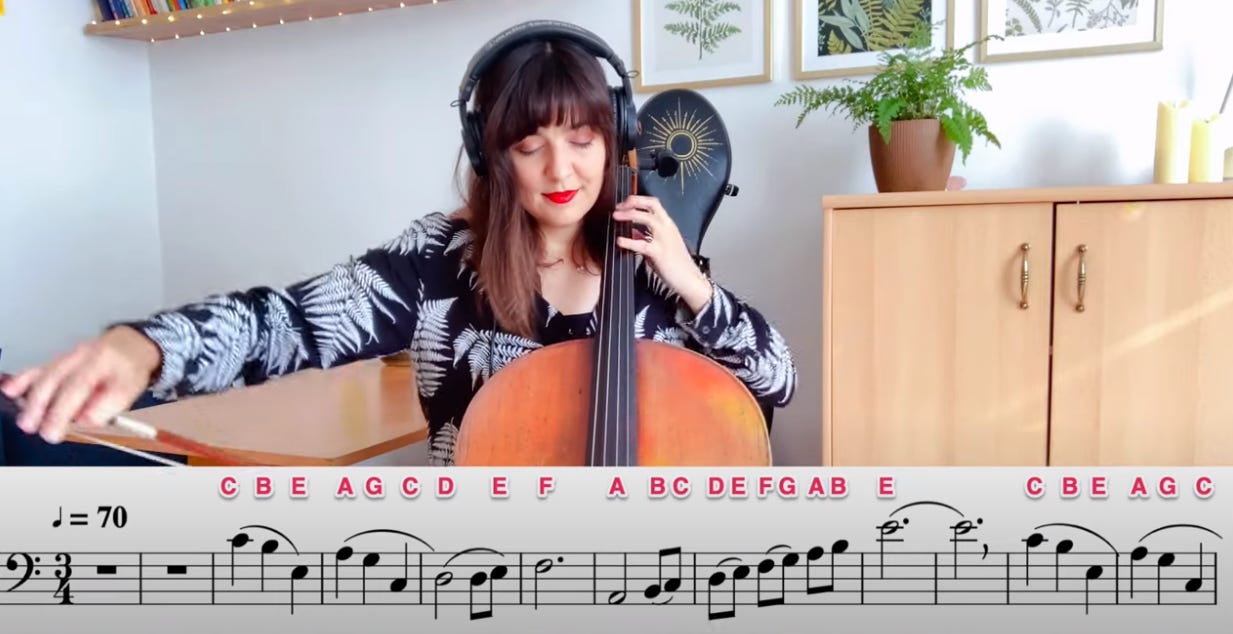
The benefits of learning a piece by ear.
Some of the great benefits I’ve experienced after learning how to play and learn a whole new piece by ear are:
Ear training to be able to find any note you hear on your cello.
Expands your familiarity with the fingerboard
Improves intonation makes your ear more sensitive and focuses on hearing with your ear.
Easier way to double-check the pitch and also misread notes from the sheet music. (That happened to me a lot, every time I would have to have my brother point it out, but now I have a way to double-check myself.)
Made me learn my new pieces twice as fast as if I were reading the sheet music.
So if learning by ear is so great, do we still need to learn the sheet music?
The answer is yes, and let me tell you why!
Sometimes when you learn a piece ear by watching or listening to a YouTube video Instagram reel or TikTok. Sometimes the piece might have been edited from the original. So it does not follow the original sheet music.
Learning a really new piece can be hard, mostly if you can’t find a recording of someone playing it. I had a really hard time learning study books mostly the more modern ones since usually people would not go through the entire book so it was really challenging for me to double-check on my own. That’s why when I pick my new favorite pieces, they are the more famous and well-known pieces that many cellists have already played. (And playing it in many various ways too.)
It’s a beneficial skill for you to be able to read the sheet music. It does come in handy if you want to write your own pieces, or transcribe pieces into different keys and also break it down to easier version for students so they can read it.
Having a proper sense of rhythm. It’s hard by ear since it based on feel and improvising. So seeing the music sheet helps you find the exact time signature and beat to make sure you’re playing the rhythm correctly.
So in the end, they are accessible tools for everyone to use. The tools to improve your cello skills and play your favorite pieces in the easiest and most enjoyable manner. It’s beneficial to learn both. Mostly when you are just starting out. Start with learning the basic foundations and later once you have a solid foundation you can add, change, and expand as your heart desires! Be curious and explore, discover!
Mini exercise
So this week, try out having both the sheet music and also have a video of your favorite cellist playing the piece you want to learn and learn it using both tools.! Happy practicing and have fun!
See you all next week with discoveries, tips, and advice!
So there are my discoveries, Tips and Advice on how to improve your cello playing. I hope you enjoy this fun new way of practicing!
Do you need help with your cello learning?
Feel free to leave a comment on certain things you're stuck with and need a fellow cello friend to take a look at it from a different perspective! Maybe we can figure out something together!
You can also share it with fellow friends artists, and cellists of today's Victoria Yu Art on social media, forward it to someone who might benefit, or text it to a friend. Thanks for reading!
More tips and advice coming soon, so make sure to subscribe for free right here!